
From prototype to production – the ADPM process explained
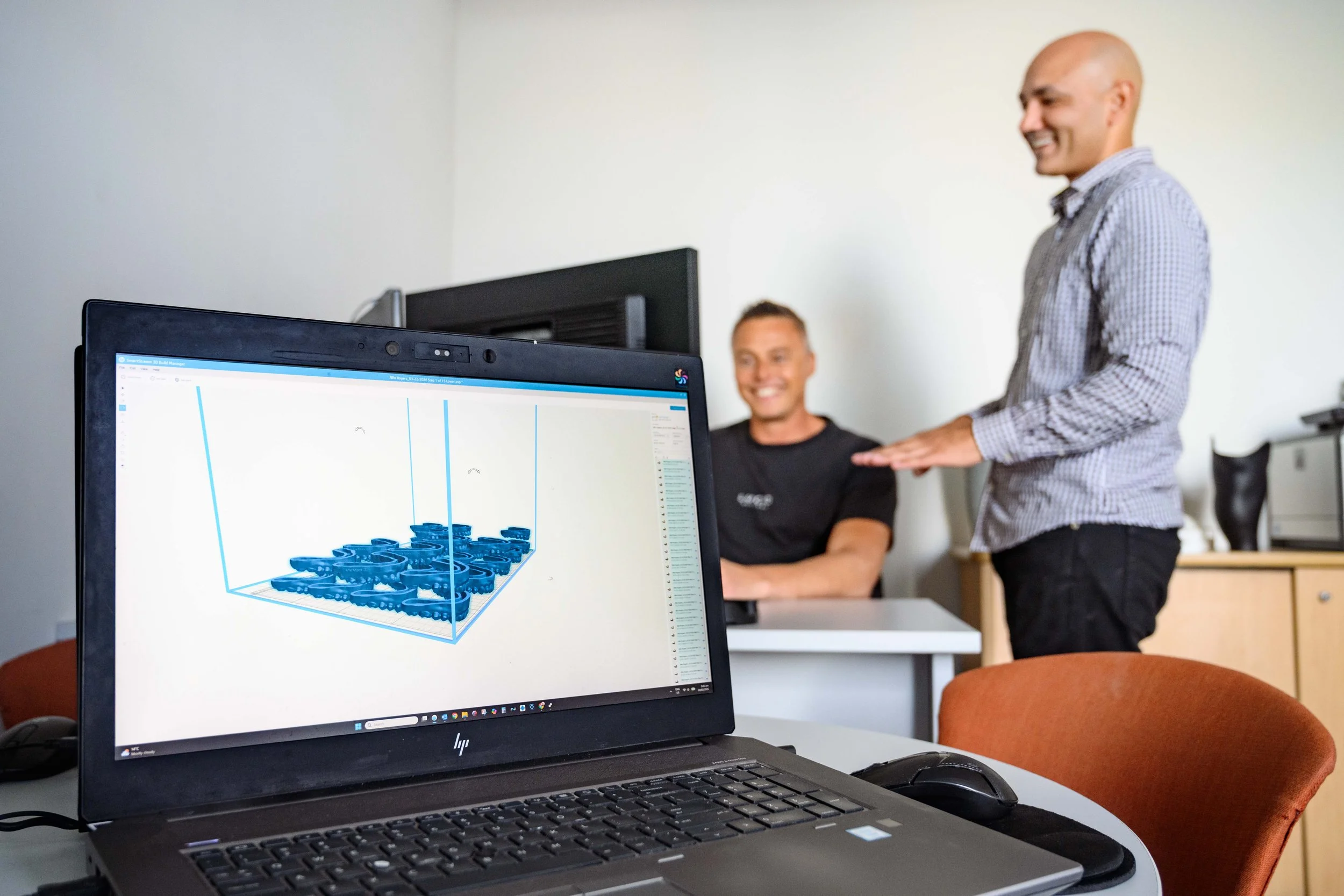
One of the things we hear most often from new clients is that they weren't sure what to expect from working with an additive manufacturing business. Would they need to arrive with a finished CAD file? Would they be handed off to a machine and left to figure it out? How involved would the team actually be?
The honest answer is that we work very differently to a standard print-and-ship service. Here's exactly how our process works, from your first conversation with us through to delivery of your finished product.
Step 1: Consulting
Every project starts with a conversation. We want to understand your product, your application, your timeline and what you're ultimately trying to achieve – whether that's a prototype for testing, a small production run for a new market, or ongoing supply of a component your business depends on.
From there, we'll advise on the best approach: which material suits your requirements, what the likely lead-time looks like, what finishing is appropriate, and what the pathway to production looks like if you're starting at prototype stage.
We also work with in-house product development teams who need extra capability or resource at specific points in a project. If that's you, we can slot into your existing process wherever it makes most sense.
This stage is about getting the brief right. Good outcomes start here.
Step 2: Prototyping
If your product is still in development, or if you're moving into additive manufacturing for the first time, prototyping is where we'll start. We'll produce a sample that is genuinely representative of the final end-use product – not just a rough shape, but a functional part that can be tested, assessed and refined.
Our team works with you through this stage, reviewing outputs and advising on design adjustments that might improve performance, reduce cost or streamline production. It's a collaborative process, and we bring both technical knowledge and manufacturing experience to the table.
The goal is to get to a locked-in design that you're confident in before any production investment is made.
Step 3: Manufacturing
Once the design is confirmed, we move into production. We handle runs of up to 30,000 units, and our HP Multi Jet Fusion technology ensures consistent quality and dimensional accuracy across the full run – not just the first batch.
We manage and oversee every job through production, with our team checking outputs against specifications at each stage. You won't be chasing us for updates – we communicate proactively and flag anything that needs your input before it becomes a problem.
For clients who need flexibility, we also offer just-in-time production and drop shipping. Order what you need, when you need it, without the overhead of holding excess stock.
Step 4: Finishing
Depending on your product's application, finishing may be the final step. Our polymer blasting process gives your product a smooth, consistent surface and a significantly more professional appearance than the standard machine output.
We offer black, dark blue or standard grey colour options. For products going directly to customers, or into environments where appearance matters, finishing makes a real difference.
Then what?
Once your product leaves us, our relationship doesn't end. We work with most of our clients on an ongoing basis – either for repeat production runs, new product development, or as their business grows and their manufacturing needs evolve.
We can also help with the transition to mass manufacturing when the time comes – connecting you with the right people and helping to ensure the handover is as smooth as possible.
Ready to start?
Whether you're at concept stage with a rough idea, or you have a design file ready to go, the first step is the same: a conversation with our team. We'll take it from there.
