
What is Additive Manufacturing – and when should you use it?
If you've heard the term "additive manufacturing" and assumed it was just a fancy way of saying 3D printing, you're not entirely wrong – but you're also missing most of the picture.
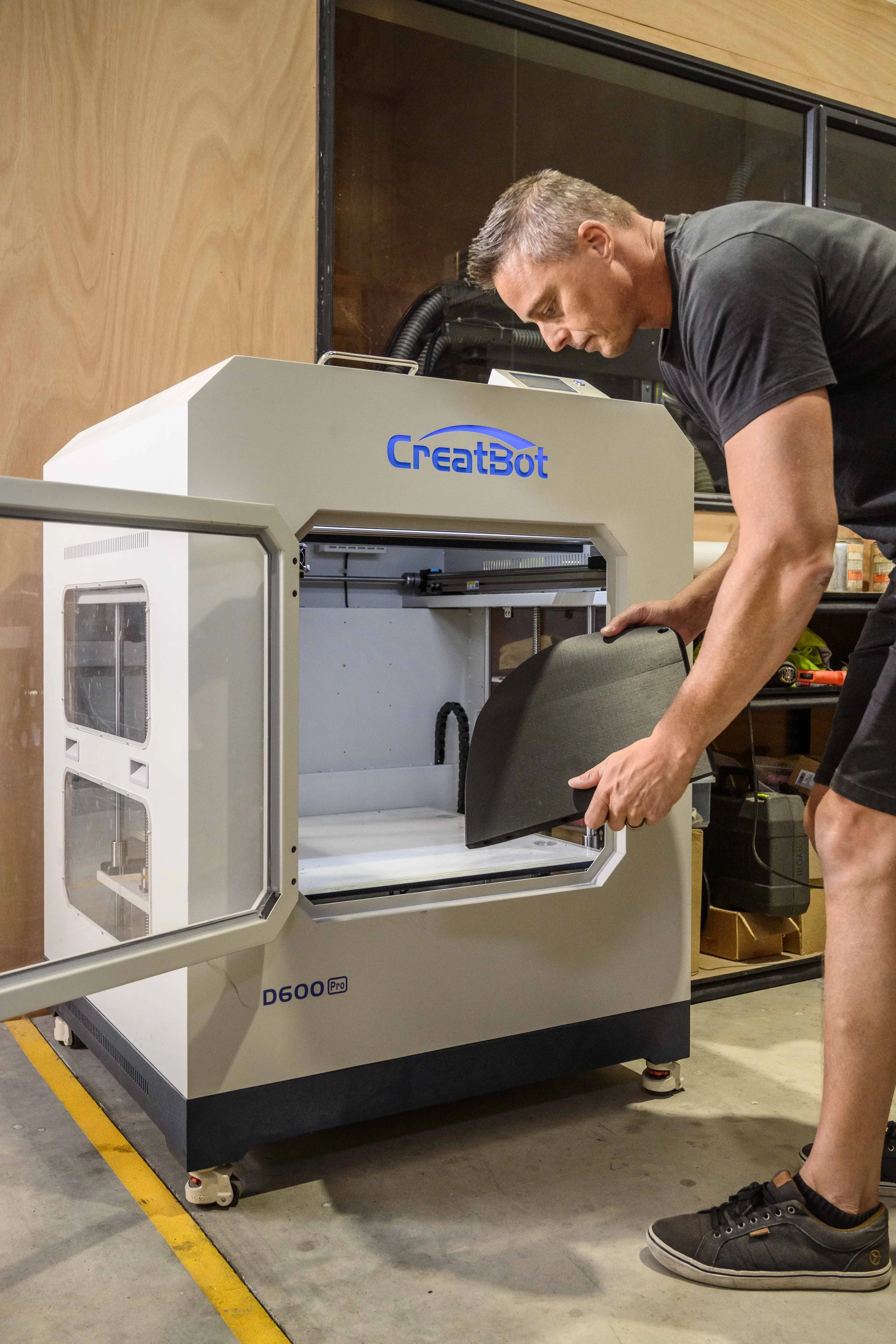
Additive manufacturing (AM) is the process of building a physical object layer by layer from a digital design file. Unlike traditional subtractive manufacturing – where material is cut, drilled or machined away from a larger block – additive manufacturing builds up only what's needed, with minimal waste and exceptional precision.
It's this fundamental difference that makes additive manufacturing so powerful for product development and low volume production.
So what's the difference between additive manufacturing and 3D printing?
The short answer: 3D printing is a type of additive manufacturing. But when most people picture 3D printing, they think of desktop machines producing hobby parts or one-off creative projects. Additive manufacturing refers to the broader, industrial-grade application of the same principle – used to produce functional, engineering-grade components at production scale.
At ADPM, we use HP Multi Jet Fusion technology, which is a world away from a consumer 3D printer. It produces parts with consistent mechanical properties, tight tolerances and surface finishes suitable for real-world product applications – including marine, medical, agritech and aerospace.
When does additive manufacturing make sense?
Additive manufacturing is not the right solution for every job. Injection moulding, for example, remains the most cost-effective route once you're producing at high volume and your product design is locked in. But there are specific situations where additive manufacturing is not just a viable option – it's the smarter one.
You're in the product development phase. If your product is still being refined, the last thing you want is to commit to expensive injection mould tooling before you know the design is right. Additive manufacturing lets you produce functional prototypes and test parts quickly, make changes between runs, and move through development iterations without the cost penalty.
You need a small production run. For orders of up to 30,000 units, additive manufacturing can be significantly more cost-effective than injection moulding – which requires substantial upfront tooling investment before a single part is produced. If you're entering a new market, managing seasonal demand, or offering just-in-time parts to your customers, additive manufacturing gives you flexibility that traditional manufacturing simply can't match.
You're bridging to mass production. Many of our clients use additive manufacturing as a bridge – getting product to market and into customers' hands while their injection moulding tooling is being produced or while they're building the volume to justify it. This keeps revenue flowing and real-world product feedback coming in, without delaying market entry.
Your product has complex geometry. Some parts are difficult or expensive to produce through traditional methods. Additive manufacturing handles complex shapes, internal channels, integrated features and fine detail without the need for additional tooling or assembly steps.
You need speed. Additive manufacturing compresses lead-times dramatically compared to traditional manufacturing routes. When time-to-market is a competitive advantage – and in most industries it is – this matters.
Is additive manufacturing right for your business?
If you're a NZ manufacturer or product developer working on polymer products and any of the above sounds familiar, the answer is probably yes. The starting point is a conversation about your product, your volumes and your timeline – and we can help you work out whether additive manufacturing is the right fit, and what that process looks like in practice.
