
Robot end of arm tooling: why the hand matters more than the arm
When most people picture factory automation, they picture the arm: the big orange or yellow manipulator swinging parts across a production line. Ask any automation engineer, though, and they'll tell you the arm is only the delivery system. The real work happens at the wrist.
That's where the end of arm tooling (EOAT) sits. The arm positions the part, and the EOAT interacts with it. Get the tooling right and your robot becomes a productive, efficient asset. Get it wrong and you have an expensive multi-axis machine that can't do the job you bought it for.
The tool defines the robot
EOAT is any device fitted to the wrist of a robot to grip, lift, move, manipulate or work on a part. Grippers, custom fingers, vacuum manifolds, tool changers and sensor mounts all fall into this category.
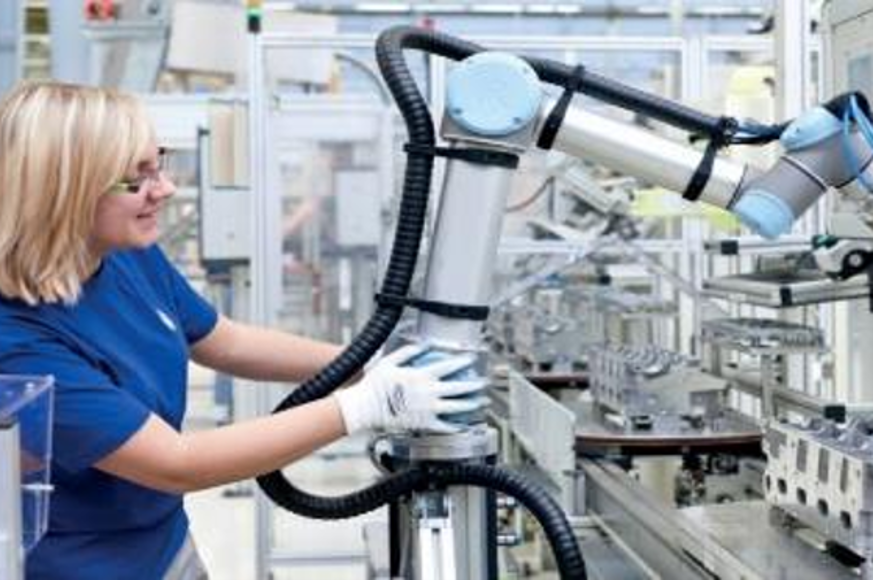
The tooling decides what the robot actually is. The same arm can be a palletiser, a welder or a delicate pick-and-place unit depending on what's fitted to the end of it. Robot arms are increasingly standardised. The tooling, designed around your part, your line and your environment, is where the real performance gains are made.
Weight is a tax on every movement
In robotics, every gram at the end of the arm costs you. Heavy tooling limits acceleration, slows cycle times and can push you into a larger, more expensive robot just to carry the same payload.
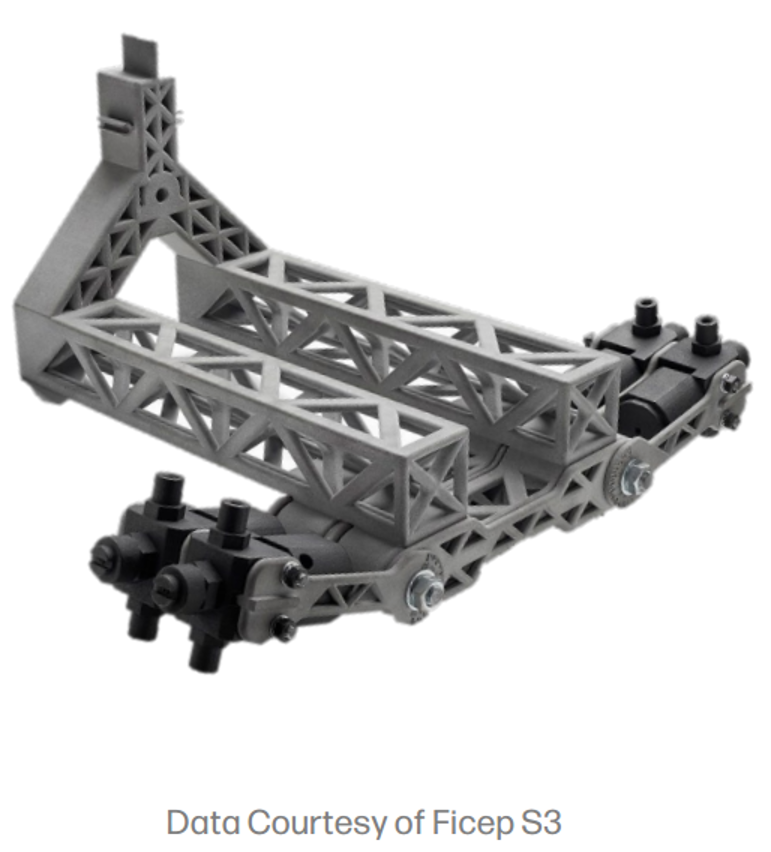
Traditionally, EOAT has been built from aluminium extrusion profiles and CNC-machined parts, bolted together into assemblies that are heavy and time consuming to build. Additive manufacturing changes that. Using HP Multi Jet Fusion, we can consolidate a multi-part assembly into a single, lightweight polymer component designed around exactly what it needs to do.
It's not only about weight. Additive manufacturing lets us build internal vacuum and air channels directly into the body of the tool, geometry that can't be machined. That means fewer fittings, fewer hoses to snag, fewer leak points and a cleaner, more compact tool. Lighter tooling also means faster movements and more throughput from the robot you already own.
Automation is growing, and so is the need for custom tooling
According to the International Federation of Robotics' World Robotics 2025 report, more than 4.6 million industrial robots were operating worldwide in 2024, with over 542,000 new units installed that year alone. Annual installations have now topped 500,000 for four years running, and the IFR expects that figure to pass 700,000 by 2028.
As more manufacturers automate, generic off-the-shelf tooling is giving way to application-specific EOAT designed to lift throughput, quality and return on investment. That's as true for a Bay of Plenty or Waikato manufacturer adding its first collaborative robot as it is for a large offshore plant.
Collaborative robots raise the bar
Automation is also moving out of the safety cage. Collaborative robots (cobots) and soft robotics now work alongside people in packing, assembly and electronics, and that puts tighter demands on the tooling:
ESD compliance to protect sensitive electronic components
Thermal considerations when handling parts coming off hot processes
Food safety rules, which often limit tooling to secondary packaging
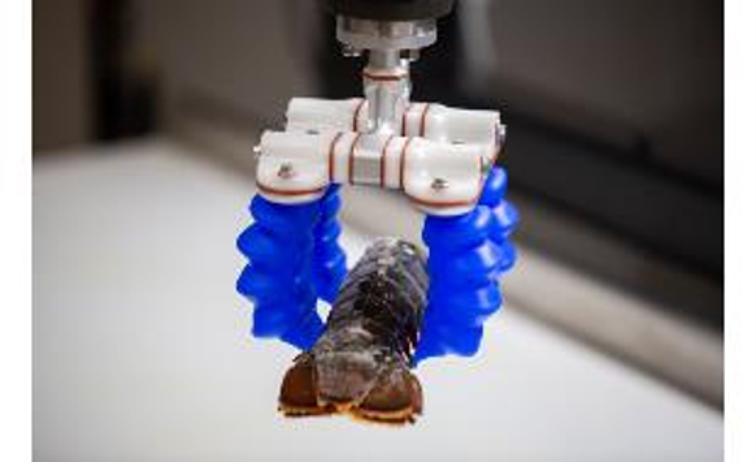
Softer, compliant gripping surfaces for delicate or irregular products
These are design problems first. Material choice, wall thickness and geometry all need to suit the environment the tool works in.
Where we fit in
The robotics ecosystem relies on robot manufacturers, system integrators and specialist tooling providers working together. We work alongside integrators and in-house engineering teams as a local additive manufacturing partner, helping design, prototype and produce custom EOAT in engineering-grade polymers. With no moulds or tooling to pay for, we can iterate quickly on a prototype gripper, then move straight into low volume manufacturing for spares, replacement fingers or additional cells, with reliable lead-times you can plan around.
Your robot already has the muscle. The question is whether it has the right hand to put that muscle to work.
Contact us to discuss your manufacturing challenge or product development project, and let's see if we can help you get to market more efficiently and cost effectively.
